
October 21, 2026 · 6 min read
How to Get Piano Students to Practice at Home: 9 Ideas That Work
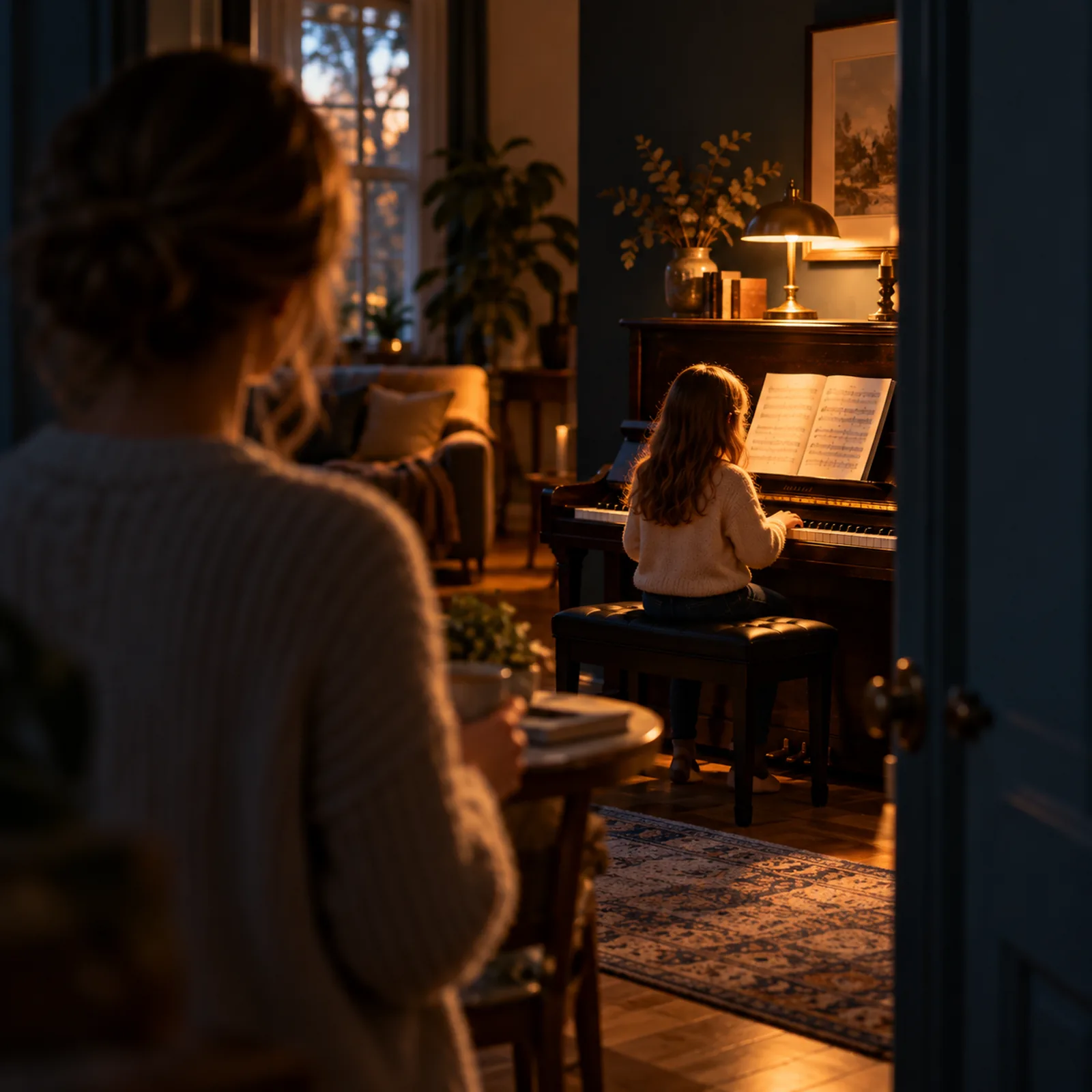
You get thirty minutes a week with each student. The other six days decide whether next week's lesson moves forward or repeats this one. Most teachers already know the usual advice: practice every day, little and often. The trouble is that students hear it every week, and it rarely changes what happens at home. These nine ideas work because they change the week itself, not the speech about it.
1. Assign tasks, not minutes
"Practice 20 minutes a day" tells a ten-year-old how long to sit, not what to do. "Play measures 9–16 hands together, slowly, three times" can be finished, and finishing is what makes a child want to sit down again tomorrow. Give every piece one concrete task and a way to know it is done.
2. Write the assignment down where they will see it
A note in a notebook that lives in the piano bag is invisible on Wednesday. Put the week's work somewhere the student and the parent both look: a page on the fridge, a shared note on the parent's phone, or a studio app. By about nine or ten, students can write their own instructions during the lesson, which also tells you whether they understood them.
3. Make the first five minutes easy
Starting is the hardest part of practicing. Begin every session with something the student already plays well, a favorite piece or a warm-up they enjoy, so the first thing they feel at the bench is success. The hard passage comes second, when they are already sitting there.
4. Shrink the goal until it fits a school night
A goal that needs forty minutes will be skipped on a night with homework and soccer. Agree on a smallest-possible practice, even five minutes on the assigned task, that counts as "practiced today." Kept streaks of small days beat occasional heroic ones.
5. Let them choose some of the music
Ask what they listen to, what games they play, which film scores they hum. An arrangement of something they chose, at the right level, gets practiced without being asked. Keep the method book for skills, and let one piece each term be theirs.
6. Bring parents in with specifics
"Please make sure she practices" gives a parent nothing to do. "This week, ask her to play you the left hand of the Minuet on Thursday" does. A short weekly note to parents with one thing to listen for turns them from enforcers into an audience, and children practice for an audience.
7. Give them a reason to play for someone
Recitals are months apart. Smaller deadlines work better: a family concert on Sunday, a recording sent to a grandparent, a group class where everyone plays one piece. A date on the calendar makes this week's practice matter.
8. Make progress visible
Students rarely notice they are improving, because it happens slowly. Show them. Keep a list of finished pieces, mark the day a passage first went cleanly, compare a recording from September with one from November. When the work shows, more work follows.
9. Use rewards with care
Stickers and prizes can help young beginners build a habit, but reward the habit, not every single practice, or students learn to expect payment for playing. Keep rewards tied to effort the student controls, like days practiced, rather than to talent.
Putting it together
- One clear task per piece, written where student and parent both see it.
- An easy start, and a smallest-possible practice that still counts.
- Music they chose, an audience to play for, and progress they can see.
If you'd like a tool for the written-down part, Vittoria Music Studio puts each week's assignments on the student's own phone, logs the minutes they practice, and shows parents the week at a glance. It's free for students and families, and teachers can try it for five days.